
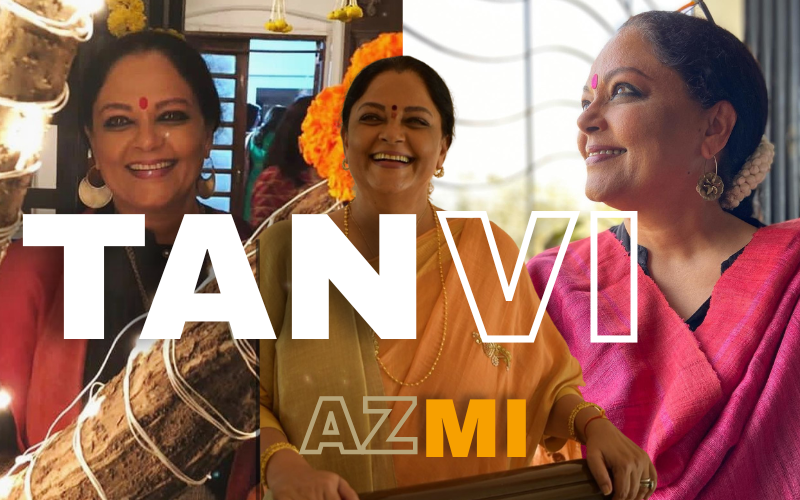
Tanvi Azmi is a celebrated Indian actress best known for playing the fierce Radhabai in Bajirao Mastani, a role that won her the National Film Award for Best Supporting Actress.
Quick Stats Table
| Category | Details |
|---|---|
| Full Name | Tanvi Azmi (née Kher) |
| Date of Birth | November 9, 1963 (Bombay, Maharashtra) — some sources list 1960; verify with official records |
| Age (as of 2026) | 62 years |
| Profession | Film and television actress |
| Debut Film | Pyari Behna (1985) |
| Famous For | Bajirao Mastani, Thappad, Tribhanga, Akele Hum Akele Tum |
| Mother | Usha Kiran (veteran Marathi-Hindi actress) |
| Father | Dr. Manohar Kher |
| Husband | Baba Azmi (cinematographer) |
| Sister-in-law | Shabana Azmi |
| Major Awards | National Film Award, Filmfare nominations (multiple) |
| Height | 5 feet 4 inches (approx.) |
| Industry | Bollywood, Marathi cinema, Kannada cinema, television |
Who Is Tanvi Azmi? A Quick Introduction
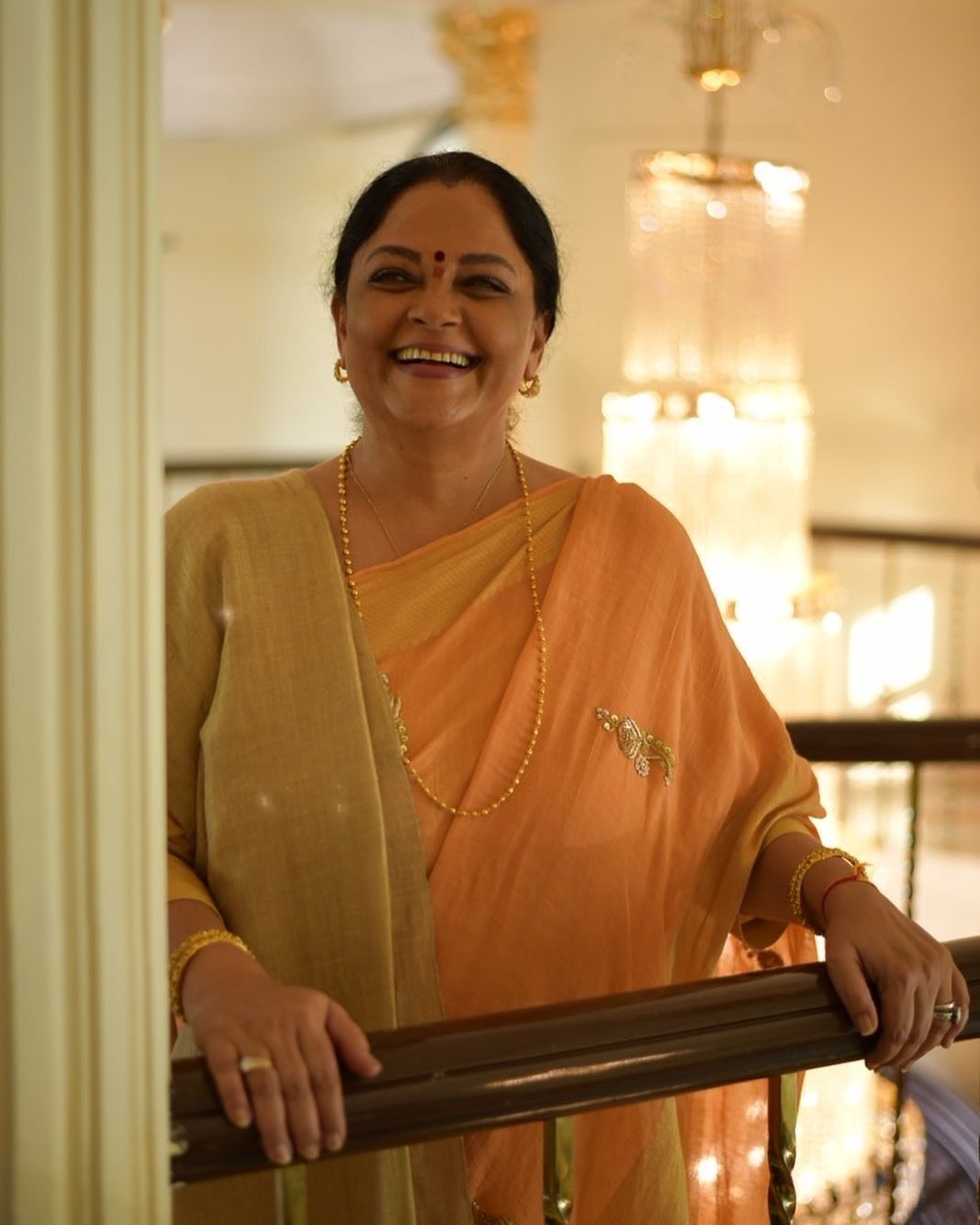
Picture this: you’re born into a house where your mother is already a superstar, and instead of coasting on that fame, you go and build your own name from the ground up. That’s basically the Tanvi Azmi story in one sentence.
Tanvi Azmi isn’t the kind of actress who chases headlines. She’s the kind who quietly shows up, delivers a performance that stays with you for weeks, and then goes right back to her next project without any fuss. She’s been doing this for over three decades now, and honestly, that kind of consistency is rare in an industry obsessed with the next big thing.
In this article, we’re covering everything worth knowing about Tanvi Azmi — her early life, her career milestones, her family, her husband, and yes, even the questions about tanvi azmi children and tanvi azmi young days that keep popping up in search bars everywhere.
What makes her story genuinely interesting isn’t just the list of films she’s appeared in. It’s the pattern behind her choices. Most actors who grow up around fame either lean into it hard or run from it completely. Tanvi Azmi did neither. She walked a middle path — using her family’s respect for the craft as a foundation, then building something entirely her own on top of it. That balance is rare, and it’s a big part of why she’s still landing acclaimed roles decades after her debut, at an age when many actresses find scripts drying up.
We’ll also look at how the industry’s perception of her has shifted over time — from “daughter of Usha Kiran” in the mid-1980s to simply “Tanvi Azmi, National Award winner” by the 2010s. That shift didn’t happen by accident. It happened because of consistent, deliberate choices, film after film, decade after decade.
Tanvi Azmi’s Early Life: Born Into Bollywood Royalty
Tanvi Azmi was born in Bombay (now Mumbai) to Usha Kiran, one of the biggest names in Marathi and Hindi cinema during the 1950s and 60s, and Dr. Manohar Kher, a respected physician who later became Dean of Sion Hospital in Mumbai.
Growing up with a mother who had already conquered the film industry could have gone two ways for Tanvi Azmi. She could have leaned entirely on that legacy, or she could have felt the pressure and run the other way. She actually leaned toward something in between — she loved the craft, but she wanted to earn her own stripes.
Here’s a fun detail: her father wanted her to study medicine, and she genuinely considered it. But her mother, Usha Kiran, gently nudged her toward acting instead, believing her daughter had a natural gift for it and that stardom would come easier at a young age. Turns out, mom was right.
What Was Tanvi Azmi Young Life Like?
When people search for tanvi azmi young photos and stories, they’re usually curious about her transformation from a shy star-kid to a powerhouse performer. In her younger years, Tanvi Azmi wasn’t the flashy, glamorous type chasing magazine covers. She was more interested in meaty roles than red-carpet moments — a trait that would define her entire career.
Her brother, Advait Kher, was a former model who later settled into a quieter family life in Nashik. So acting wasn’t compulsory in the family, but it clearly ran strong in Tanvi Azmi‘s blood.
Think about the household she grew up in for a second. Her mother wasn’t just any actress — Usha Kiran was a genuine institution in Marathi and Hindi cinema, someone who acted in more than fifty films across four decades, worked with major studios of that era, and later became the Sheriff of Mumbai, a ceremonial civic honor reserved for people of real public standing. Dinner table conversations in that house probably revolved around scripts, shoots, and the occasional gossip about which director was impossible to work with. For a young Tanvi Azmi, that environment wasn’t glamorous in the way outsiders imagine — it was simply normal life.
Her father, on the other hand, represented a completely different world. As a physician and eventually Dean of Sion Hospital, Dr. Manohar Kher brought a grounded, disciplined energy into the household that balanced out the creative chaos of showbiz. It’s easy to imagine how that mix — an artist’s instinct paired with a doctor’s discipline — shaped Tanvi Azmi into the kind of actress who treats every role like a serious project rather than a publicity opportunity.
Tanvi Azmi’s Career: How It All Began
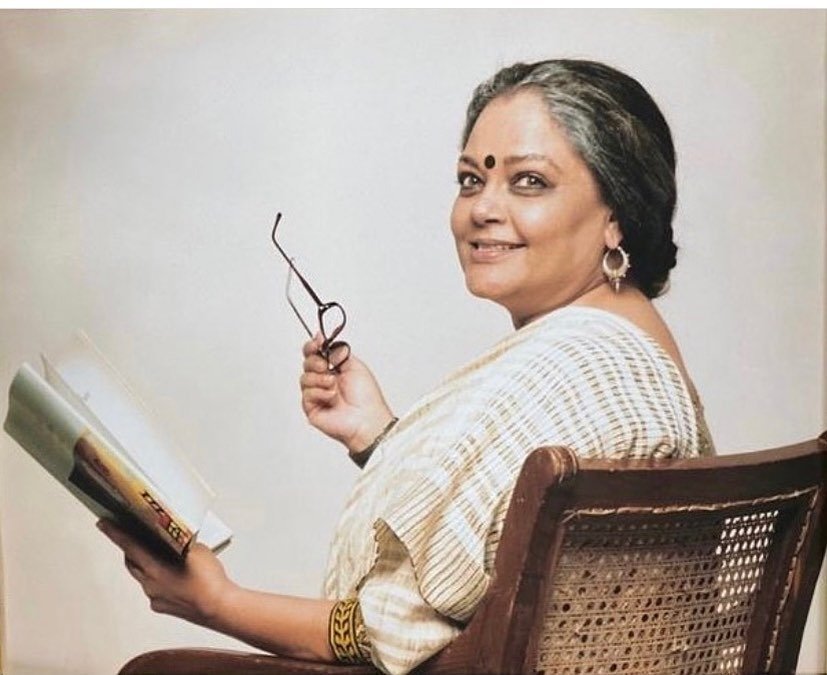
Her Debut That Nobody Expected to Work
Tanvi Azmi made her Bollywood debut in 1985 with Pyari Behna, directed by Babu. Here’s the twist — even though Padmini Kolhapure was technically the film’s female lead, it was Tanvi Azmi‘s portrayal of Seeta, the devoted sister of Mithun Chakraborty’s character, that stole the show. The film worked, and it earned her a Filmfare nomination for Best Supporting Actress right out of the gate.
That’s not a bad way to start a career, right? But instead of riding that “sister” role formula into a dozen similar films (which offers came flooding in for), Tanvi Azmi said no. She didn’t want to get boxed into playing the sweet sibling forever. That decision alone tells you a lot about how seriously she took her craft.
Let’s sit with that decision for a moment, because it’s honestly a bigger deal than it sounds. Bollywood in the 1980s loved formulas. If a debut role worked, the easiest path to a stable career was doing variations of that same role again and again — the loyal sister, the sacrificing daughter, the tearful bride. Producers were practically lining up to offer Tanvi Azmi that exact template. Turning that down when you’re a newcomer with zero leverage takes a level of confidence most young actors simply don’t have. She was betting on her range instead of her comfort zone, and as her later filmography proves, that bet paid off spectacularly.
The Rao Saheb Turning Point
After proving herself commercially, Tanvi Azmi pivoted straight into art-house territory with Rao Saheb (1986), directed by the legendary Vijaya Mehta. She played a young bride who becomes a widow, and she nailed the emotional complexity so well that the performance won international acclaim, not just applause back home.
Television Years: Working With the Best
Feeling a bit boxed in by Bollywood’s limited script options at the time, Tanvi Azmi made a smart pivot to television. She starred in the historical series Mirza Ghalib (1988), directed by Gulzar and starring Naseeruddin Shah. Working with two of India’s most respected creative minds early in her career? That’s the kind of decision that shapes an actor for life.
She also earned recognition for her role as a troubled doctor in the tele-series Jeevanrekha, which further cemented her reputation as someone who could handle emotionally heavy material with grace.
It’s worth remembering just how different television was in that era. There was no streaming, no algorithm-driven content, no binge-watching culture. A well-made television serial reached households across the country in a way that even a moderately successful film couldn’t always match. So when Tanvi Azmi stepped into shows like Jeevanrekha and Mirza Ghalib, she wasn’t taking a step down from cinema — she was reaching an enormous, loyal audience that would follow her career for years. That decision to embrace television early, long before it became “acceptable” for film actors to move between mediums, put her ahead of a trend that wouldn’t become mainstream for another two decades.
She also branched into regional cinema during this period, working across Marathi projects and later expanding into Malayalam and Kannada film industries — a rare feat for an actress rooted primarily in the Hindi film world. This willingness to work across languages and formats gave Tanvi Azmi a breadth of experience that most of her Bollywood peers simply didn’t build for themselves.
Tanvi Azmi’s Breakthrough Roles: A Career Timeline
| Year | Film/Show | Role Highlight |
|---|---|---|
| 1985 | Pyari Behna | Debut, first Filmfare nomination |
| 1986 | Rao Saheb | Young widow, international acclaim |
| 1988 | Mirza Ghalib (TV) | Worked with Gulzar and Naseeruddin Shah |
| 1993 | Vidheyan (Malayalam) | Directed by Adoor Gopalakrishnan |
| 1995 | Akele Hum Akele Tum | Second Filmfare nomination |
| 1998 | Dushman | Psychological thriller with Kajol, Sanjay Dutt |
| 2015 | Bajirao Mastani | Radhabai — her most iconic role, National Award win |
| 2020 | Thappad | Fifth Filmfare nomination |
| 2021 | Tribhanga | Netflix original, Filmfare OTT nomination |
The Role That Changed Everything: Radhabai in Bajirao Mastani
If you ask most people how they know Tanvi Azmi, they’ll say “Bajirao Mastani.” And fair enough — her portrayal of Radhabai, the stern, commanding mother of Bajirao (played by Ranveer Singh), is genuinely one of the most striking supporting performances in modern Bollywood.
Here’s a wild fact: multiple big names, including Shabana Azmi (her own sister-in-law), Dimple Kapadia, and Supriya Pathak, were reportedly considered for the role before it landed with Tanvi Azmi. She shaved her head completely to play the widowed Radhabai, wore a stark white sari throughout, and turned her intense, piercing eyes into a weapon of pure screen presence.
That commitment paid off. She won the National Film Award for Best Supporting Actress and the Guild Film Award for the same category. Not a bad trophy shelf for a role she almost didn’t get.
There’s also a personal layer to this story that makes it even more special. Winning a role that was reportedly once considered for Shabana Azmi — her own sister-in-law and someone Tanvi Azmi has openly admired, calling her “a lioness among actresses in India” — could have felt awkward. Instead, it became a moment of mutual respect within the family. Two talented women, related by marriage, both capable of carrying a role like Radhabai, and it simply worked out that Tanvi Azmi was the one who brought it to life on screen. That’s the kind of story that makes Bollywood family trees genuinely fascinating.
Physically transforming for the role was no small task either. Shaving her head completely, at a stage in her career where she could have easily said no to something so drastic, showed a level of commitment that directors notice and remember. Sanjay Leela Bhansali, known for demanding perfection from every actor in his frame, reportedly found in Tanvi Azmi someone willing to match that intensity without complaint.
Read more
Thappad and Tribhanga: Proving She Was Just Getting Started
Just when people assumed Tanvi Azmi had already delivered her career-best work, she showed up in Thappad (2020) and earned her fifth Filmfare nomination. Then in 2021, she starred alongside Kajol and Mithila Palkar in the Netflix original Tribhanga, directed by Renuka Shahane, which picked up widespread critical love and earned her a Filmfare OTT nomination.
At a stage in her career when many actresses her age get pushed into forgettable “mother” roles, Tanvi Azmi kept landing parts with real emotional depth. That’s not luck. That’s reputation built over decades.
In Tribhanga, she played a role rooted in complicated family trauma and generational tension between mothers and daughters. It’s the kind of layered, uncomfortable-but-honest role that a lot of established actors avoid because it doesn’t offer any easy “hero moment.” Tanvi Azmi leaned right into that discomfort, and critics noticed. Sharing screen space with Kajol, an actress known for her own commanding presence, and still walking away with praise says a great deal about how she approaches every project — not as competition for screen time, but as a genuine collaboration in storytelling.
The same pattern shows up in Thappad. Rather than playing a stereotypical supportive or dismissive mother-in-law figure, Tanvi Azmi‘s character added real nuance to a film that was already being praised for handling difficult social themes with sensitivity. It’s this pattern — choosing complicated, human characters over easy, likable ones — that keeps critics and casting directors coming back to her, film after film.
Tanvi Azmi Husband: The Baba Azmi Connection
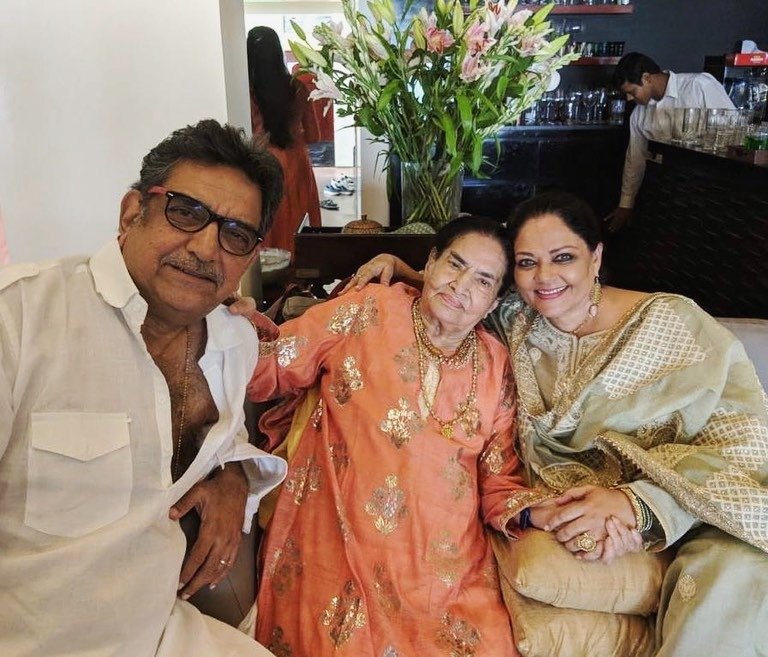
Now let’s talk about the question everyone types into Google: who is tanvi azmi husband?
Tanvi Azmi is married to Baba Azmi, a respected cinematographer in the Hindi film industry and the brother of veteran actress Shabana Azmi. This makes Tanvi Azmi part of the extended Akhtar-Azmi family, one of Bollywood’s most storied creative dynasties, which also includes poet Kaifi Azmi (her father-in-law) and writer Javed Akhtar (through marriage connections).
Baba Azmi has worked as a cinematographer on several hit films, including Arjun, Beta, Dil, Tezaab, Mr. India, and Akele Hum Akele Tum. Interestingly, Tanvi Azmi herself acted in Akele Hum Akele Tum, one of the films her husband shot.
How Did They Meet?
According to multiple biography sources, Tanvi Azmi and Baba Azmi met on the sets of her very first film, Pyari Behna. It was reportedly a love marriage, and despite coming from different family backgrounds, both sides were broad-minded enough to support the union without drama. Decades later, they’re still one of Bollywood’s quieter, more stable couples — no scandals, no tabloid drama, just two people who’ve stayed dedicated to their crafts.
What’s genuinely refreshing about the tanvi azmi husband story is how ordinary and grounded it sounds compared to typical Bollywood romance narratives. There was no big public courtship, no dramatic reveal, no years of speculation in tabloids. Two people worked together, fell for each other over the course of a film shoot, and built a life together. In an industry where relationships are often manufactured for publicity or picked apart by paparazzi, Tanvi Azmi and Baba Azmi have managed to keep their marriage almost entirely out of the public eye — which, frankly, seems to have worked in their favor.
Both being deeply embedded in the film industry — one behind the camera, one in front of it — also means they likely understand each other’s work pressures in a way outsiders wouldn’t. A cinematographer’s schedule and an actress’s shooting calendar rarely align neatly, yet the couple has stayed together for decades, which says something about the strength of their partnership beyond the glamour of the industry they both call home.
Tanvi Azmi Children: What We Know
Searches for tanvi azmi children are common, but here’s the honest truth — Tanvi Azmi keeps her family life, including details about her children, remarkably private. Unlike many Bollywood families who put their kids in the spotlight early, Tanvi Azmi and Baba Azmi have chosen to keep this part of their life away from the media glare.
Note for readers: Some directories mention a general figure for children, but specific verified names and public details are limited. We recommend checking official interviews or verified entertainment publications for the most current and accurate information on this topic.
What we do know is that Tanvi Azmi is part of a large, close-knit extended family — she’s the aunt of actress Saiyami Kher (her brother Advait’s daughter) and connected by marriage to actress Shabana Azmi and her children, Zoya Akhtar’s cousin circle, and the wider Akhtar-Azmi clan.
This kind of privacy is actually pretty admirable when you think about it. It would be incredibly easy for Tanvi Azmi, given her family’s fame, to use her children (if she has any) as a way to generate extra publicity or media attention. Plenty of celebrity parents do exactly that. Instead, she’s drawn a firm boundary between her public career and her private family life, and that boundary has held for decades. If anything, that consistency should be respected rather than treated as a mystery to “solve.”
For readers specifically researching tanvi azmi children, our recommendation is simple: rely on official statements or confirmed interviews rather than unverified fan pages or aggregator sites, many of which recycle unconfirmed details from each other without any original sourcing.
Tanvi Azmi’s Family Tree: A Quick Breakdown
| Relation | Name | Known For |
|---|---|---|
| Mother | Usha Kiran | Veteran Marathi-Hindi actress, Sheriff of Mumbai (1996-97) |
| Father | Dr. Manohar Kher | Physician, Dean of Sion Hospital |
| Brother | Advait Kher | Former model |
| Husband | Baba Azmi | Cinematographer |
| Sister-in-law | Shabana Azmi | Veteran actress |
| Father-in-law | Kaifi Azmi | Legendary Urdu poet |
| Mother-in-law | Shaukat Azmi | Actress and writer |
| Niece | Saiyami Kher | Actress |
This family tree alone explains why Tanvi Azmi carries herself with such quiet confidence on screen. She grew up surrounded by artistic excellence and later married into even more of it.
Expert Insight: Why Tanvi Azmi’s Career Is a Masterclass in Longevity
Here’s something worth noticing if you actually study Bollywood careers: very few actresses manage to stay relevant across four different decades without reinventing their entire image every five years. Tanvi Azmi has done exactly that, and the trick isn’t glamour — it’s role selection.
She consistently picked characters with substance over characters with screen time. A troubled doctor. A grieving widow. A menacing mother. A dance guru grappling with family trauma in Tribhanga. None of these are “easy” roles, and none of them rely on youth or beauty standards to work. That’s precisely why she’s still getting nominated for major awards well into her 60s, while many of her contemporaries faded out decades ago.
If there’s one lesson content creators, aspiring actors, or honestly anyone in a creative field can take from Tanvi Azmi‘s career, it’s this: consistency in craft beats consistency in visibility, every single time.
Compare this to the typical arc of a supporting actress in Bollywood. Many break through with a strong early role, get typecast into a narrow lane, and then quietly disappear from major productions once they hit their 50s. Tanvi Azmi dodged that entire pattern. Instead of narrowing her range as she got older, she actually expanded it — moving from period dramas to hard-hitting social films to streaming originals, adapting to whatever medium and story format was relevant at the time. Streaming platforms in particular have been kind to actors like her, since they reward performance depth over box-office star power, and Tanvi Azmi was perfectly positioned to benefit from that shift when Tribhanga landed on Netflix.
There’s also something to be said about how she’s handled the industry’s obsession with youth. Rather than fighting that obsession or disappearing because of it, Tanvi Azmi simply kept choosing roles where age was part of the character’s strength rather than a limitation — a stern matriarch, a wise doctor, a woman shaped by decades of lived experience. That’s a smart, sustainable way to stay relevant in an industry that isn’t always kind to actresses as they get older.
Tanvi Azmi’s Awards and Recognition
| Award | Film/Show | Result |
|---|---|---|
| Filmfare Best Supporting Actress | Pyari Behna (1985) | Nominated |
| Filmfare Best Supporting Actress | Akele Hum Akele Tum (1995) | Nominated |
| Filmfare Best Supporting Actress | Dushman (1998) | Nominated |
| National Film Award Best Supporting Actress | Bajirao Mastani (2015) | Won |
| Guild Film Award Best Supporting Actress | Bajirao Mastani (2015) | Won |
| Filmfare Best Supporting Actress | Thappad (2020) | Nominated |
| Filmfare OTT Best Supporting Actress | Tribhanga (2021) | Nominated |
Award data compiled from publicly available filmography records; readers should cross-check exact years and categories with official Filmfare and National Film Award archives for citation purposes.
Frequently Asked Questions About Tanvi Azmi
1. Who is Tanvi Azmi?
Tanvi Azmi is an Indian film and television actress known for roles in Bajirao Mastani, Thappad, Tribhanga, and Akele Hum Akele Tum. She’s the daughter of veteran actress Usha Kiran.
2. Who is Tanvi Azmi’s husband?
The answer to tanvi azmi husband is Baba Azmi, a well-known cinematographer and the brother of actress Shabana Azmi.
3. Does Tanvi Azmi have children?
Details about tanvi azmi children are kept largely private by the family. Public records don’t consistently confirm specific names, so it’s best to treat unverified claims with caution.
4. What is Tanvi Azmi famous for?
She’s best known for playing Radhabai in Bajirao Mastani (2015), a performance that won her the National Film Award for Best Supporting Actress.
5. Is Tanvi Azmi related to Shabana Azmi?
Yes. Tanvi Azmi is Shabana Azmi’s sister-in-law, since Tanvi is married to Shabana’s brother, Baba Azmi.
Conclusion: Why Tanvi Azmi Still Matters
Tanvi Azmi‘s story isn’t about overnight stardom or viral fame. It’s about patience, smart role choices, and an unwillingness to be typecast — even when typecasting would have been the easier path. From her debut in Pyari Behna to her career-defining turn in Bajirao Mastani, and right through to her acclaimed work in Thappad and Tribhanga, Tanvi Azmi has built a body of work that most actors would envy.
Whether people are searching for details on tanvi azmi husband, tanvi azmi children, or simply curious about her tanvi azmi young days, the bigger takeaway is this: Tanvi Azmi proves that a long, meaningful career is built one thoughtful role at a time, not one headline at a time.
For more stardom-related gossip and exclusive celebrity news, don’t forget to visit iconicstarlife.
